

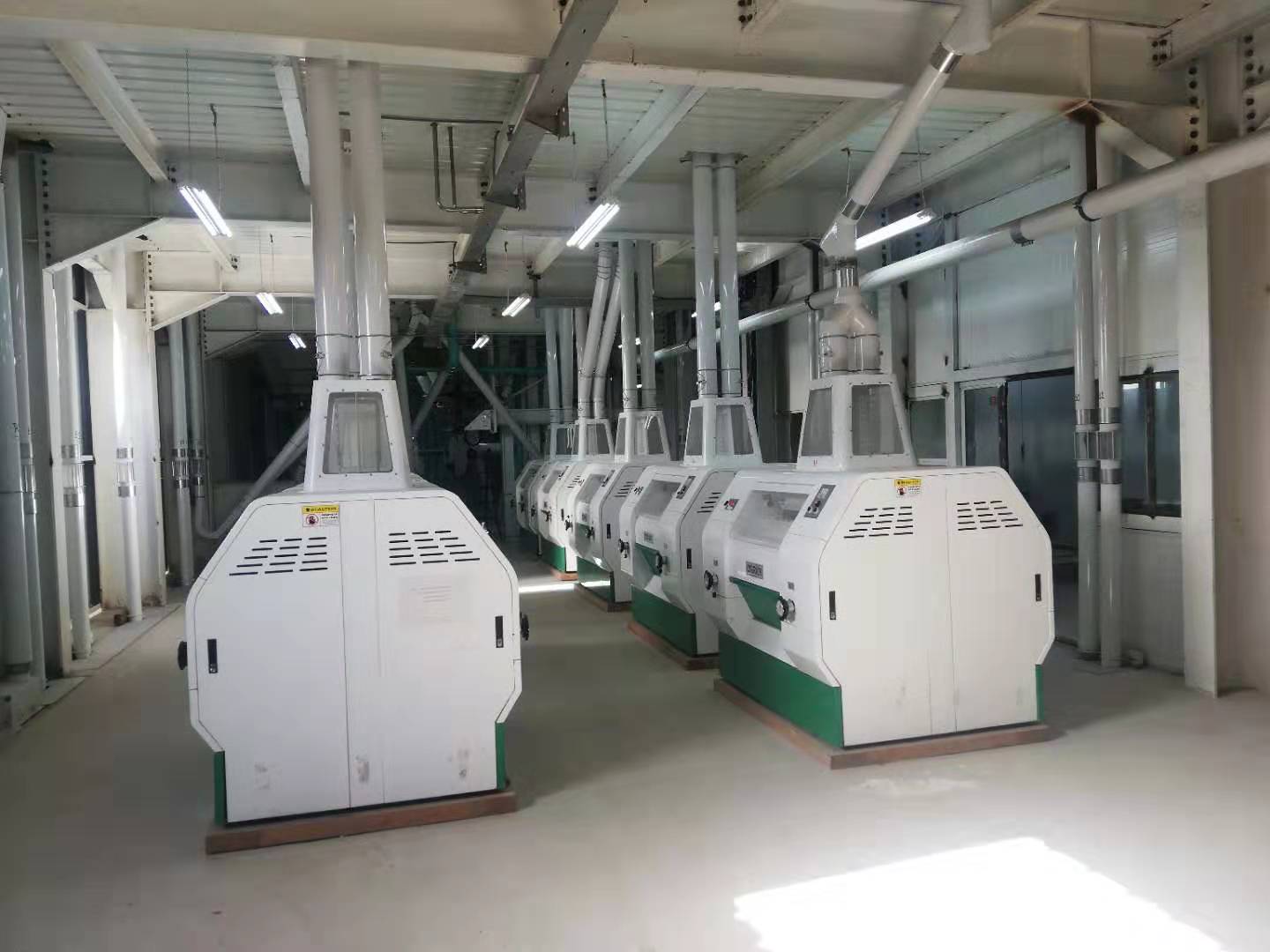
Many mill owners, when laying out their product lines, fall into a habitual assumption: "one set of equipment can mill any flour." In theory, that holds true-but "can mill" and "mills well, mills economically, mills at a profit" are two very different things. Whole wheat flour is after "completeness," bread flour after "gluten strength," cake flour after "fineness." These three products place fundamentally different demands on mill flow design, roll configuration, and the flour blending system.
Try to cover all three with a single standard mill flow, and what you typically get is this: whole wheat flour with bran so coarse the mouthfeel suffers, bread flour with gluten strength too weak to rise properly, and cake flour with high ash and a dull color. Every time you extend your product line, you are in essence re-matching your equipment configuration.
1. Mill Flow System: Differences in the Distribution of Break Rolls, Reduction Rolls, and Scratch Rolls
The mill flow is the skeleton of the milling process. The three products follow completely different logic regarding "what to grind, how many passes, and with what rolls."
Whole Wheat Flour: Simplified Flow, Bran Retained
The core requirement of whole wheat flour is "whole kernel into flour"-bran cannot be separated out, but it must be comminuted to sufficient fineness (typically 80 mesh or finer) for acceptable mouthfeel. Therefore, the mill flow design is extremely simplified:
Break rolls: Scourers and impact machines are retained for cleaning, but the number of grinding passes is greatly reduced-usually only 2–3 break passes for initial breaking.
Reduction/scratch rolls: Independent reduction and scratch roll systems can be almost entirely eliminated, or only a very short tail-end treatment retained.
Key equipment: High-intensity impact detachers or dedicated bran pulverizers are required to comminute bran to the specified fineness. Ordinary rolls struggle to grind highly tough bran fine enough-impact equipment is essential.
Bread Flour: Long Flow, Front-End Emphasis, Gluten Preservation
Bread flour requires high gluten strength and low ash (≤0.5%). The process uses a long mill flow (e.g., 7B+5M+2S) with high-pressure roller mills (8–10 bar). The flow distribution is characterized by:
Break rolls: Many passes (7 or more). Front break rolls (1B/2B) grind lightly and produce little flour-the focus is on "creating semolina" rather than "producing flour," avoiding excessive bran breakage into the flour. Tail break rolls gradually scrape residual endosperm off the bran.
Scratch rolls: 2 scratch passes specifically process the bran-adhered endosperm particles from break rolls. After purifier selection, they are sent to reduction rolls-this is the key step ensuring low ash content in bread flour.
Reduction rolls: 5 or more reduction passes. Front reduction rolls (1M/2M) are the primary source of premium bread flour. Research indicates that bread specialty flour should be blended from break roll, scratch roll, middle reduction, and partial front reduction flour streams.
Cake Flour: Short Flow, Reduction-Focused, Damage-Controlled
Cake flour requires low gluten strength, fine particle size, and low ash. The process uses a short mill flow (e.g., 4B+2M) with impact mills. The core differences are:
Break rolls: Fewer passes (about 4), because cake flour has extremely low tolerance for bran contamination-excessive break grinding actually increases bran speck risk.
Reduction rolls: Become the main flour-producing system. But the critical control point is that starch damage must be kept within 4%–6%. This means roll gap, speed, and roll surface condition on reduction rolls must be set differently from a bread flour line. If the same reduction rolls are shared, either bread flour lacks gluten strength, or cake flour exceeds damaged starch limits and cakes collapse.
2. Flour Blending Silos: From "Sell What You Have" to "Blend What's Required"
If your mill produces only one general-purpose flour, blending silos are indeed optional. But once you enter specialty flours, blending silos shift from "optional configuration" to "core asset."
Why is blending mandatory for specialty flours?
Same wheat batch, yet flour off different mill streams and extraction points behaves very differently on the rheometer. Front break, middle reduction and tail reduction flours each differ in gluten quality, ash and water absorption. To hit target gluten strength and ash consistently, bread flour has to be built from specific streams blended in precise ratios; cake flour, too, depends on selective extraction to keep gluten strength in check.
Blending Silo Configuration Requirements:
Number of bins: A dynamic blending system requires 8–12 ingredient bins to enable selective storage and mixing of multiple flour streams.
Micro-ingredient addition system: Specialty flours often require additives such as vital wheat gluten, vitamin C, and enzymes. Manual addition is too random-a micro-ingredient addition system with ±0.1% precision and mixing uniformity CV ≤ 5% is essential.
Whole wheat flour specifics: Whole wheat flour typically doesn't need a complex blending system (since bran isn't separated), but if producing "white whole wheat flour" (partial bran removal and re-addition), blending silos are equally necessary to precisely control the bran re-addition ratio.
In one sentence: Blending silos and micro-ingredient addition systems are the hardware threshold for upgrading from "selling flour" to "selling solutions." Without them, batch-to-batch consistency for specialty flours is impossible, and customer complaints and returns will become routine.
3. Practical Advice for Decision-Makers
Step 1: Define products first, then equipment. Don't start by asking "what can my line be modified into"-ask "what flour will I sell next year, and to whom." The gluten strength, ash, and fineness targets of your target products directly determine mill flow length and roll configuration.
Step 2: Blending systems take priority over mill flow modification. If budget is limited, install blending silos and micro-ingredient systems first. Mill flow modification involves production shutdowns for construction, whereas a blending system can first achieve "selective blending" based on existing flour streams-rapidly improving product consistency with modest investment. Validate the market before deciding whether to extend the mill flow.
Step 3: Whole wheat flour is a low-barrier entry point, but "fineness" is the homework you must do. Whole wheat line modification requires the smallest investment, but bran pulverization fineness below standard (finer than 80 mesh) directly causes coarse mouthfeel and low customer repurchase rates. Impact equipment selection and screen configuration are the keys to success.
Step 4: The competitive moat for specialty flour isn't the roller mill-it's the blending system. Same wheat, same roller mills-the precision and flexibility of your blending system determines whether you can consistently produce the bread flour or cake flour your customers need. The ±0.1% micro-ingredient precision metric is the watershed between "can make specialty flour" and "can make specialty flour well."
Conclusion: The Boundaries of Your Product Line Are Determined by Equipment Configuration
Whole wheat flour, bread flour, cake flour-they all look like "flour," but the underlying mill flow logic, blending logic, and quality control logic are completely different. Trying to cover all categories with one standard configuration results in being suboptimal in every category.
Truly competitive mills aren't the ones with the most machines-they're the ones whose equipment is configured to fit their product positioning exactly. Moving from all-purpose flour to specialty flours doesn't call for a big equipment replacement. What it calls for is filling in specific capabilities that serve the product strategy: a few more mill passes, another bank of blending silos, an upgraded micro-ingredient dosing system. Every one of those steps ties to a measurable product upgrade and a real gain in profit.


